Information Security and Customer Privacy Managemen
Information Security Management Policy
To effectively manage information security, GIS follows ISO 27001 “Information technology – Security techniques – Information security management systems – Requirements” and “Information technology – Security techniques – Code of practice for information security management”. Based on these standards, GIS developed its “Information Security Manual” and related rules and regulations, which were officially implemented since June 2021. In accordance with these regulations, all departments regularly conduct information security risk self-assessments to ensure the continued suitability, effectiveness, and adequacy of GIS's information security management system.
Information Security and Personal Data Protection
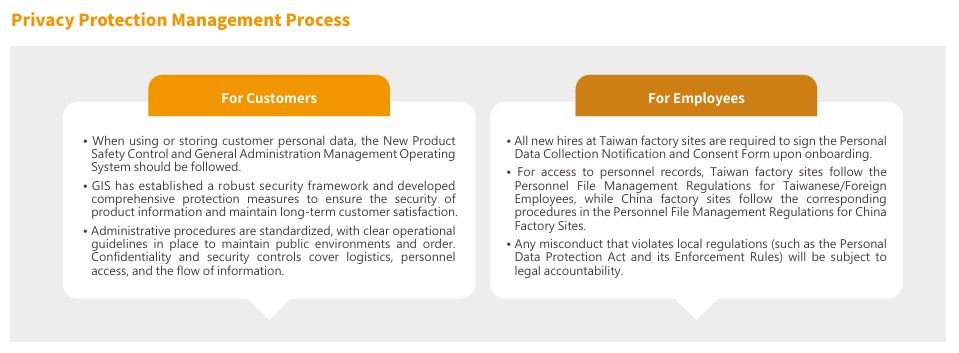
GIS values customer interests and privacy, and upholds them through a sound management framework and protective measures to prevent leakage of personal data. The Company has established the New Product Safety Control and General Administration Management Operating System to ensure comprehensive enforcement of customer privacy management, encompassing personnel security, asset security, physical security, and information security. In 2024, GIS received no complaints from customers regarding privacy violations.
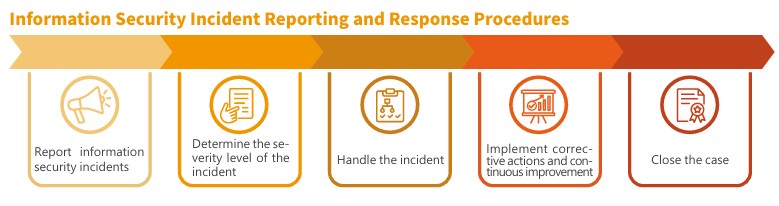
Information Security Incident Reporting and Response
In accordance with the Information Security Incident Management Operating Procedures, GIS reports information security incidents through internal reporting system. The Information Security Team is responsible for incident handling and for collecting relevant information on security breaches. Each reported incident is classified and addressed to minimize potential damage, and the team determines whether the event is an actual information security incident or merely a false alarm. No major information security incidents were reported in 2024.
Information Security Education and Training
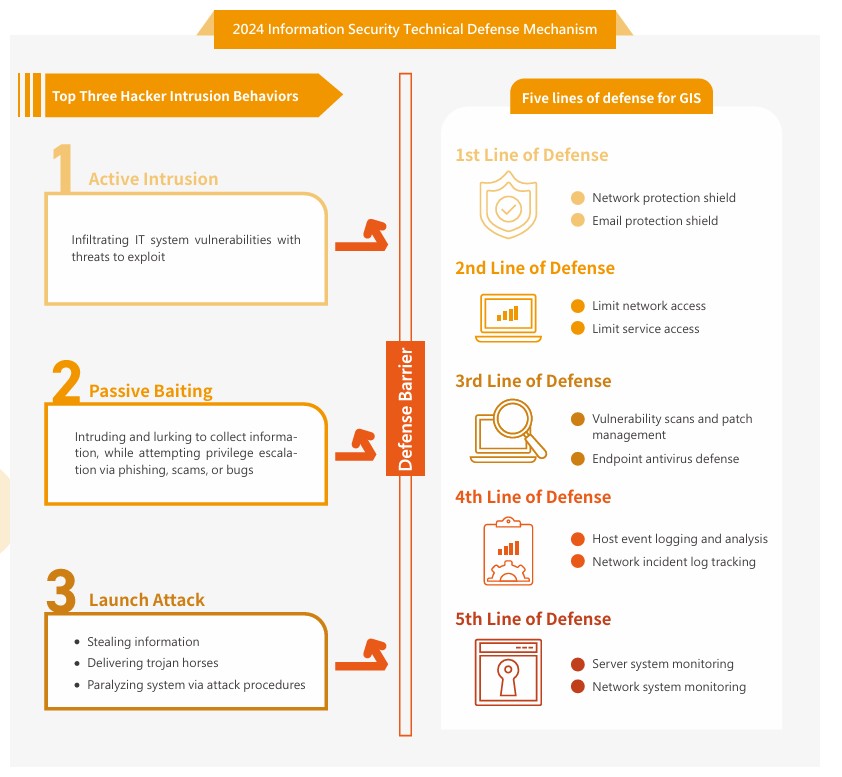
GIS places great importance on internal information security and has built five technical defense lines with services including firewalls, external network protection, and vulnerability scanning. To raise employee awareness of information security management, GIS conducts training and system disaster recovery drills from time to time. In 2024, training topics included Information Security Fundamentals, Personnel Security Control, Product Security Protection, and Information Security Promotion, with a 100% pass rate among all employees. During routine information security reviews undertaken in 2024, 14 violations were found. Corrective actions were taken to reinforce employee awareness, and no operational impact or financial losses were incurred for the Company.
Social Engineering Drills
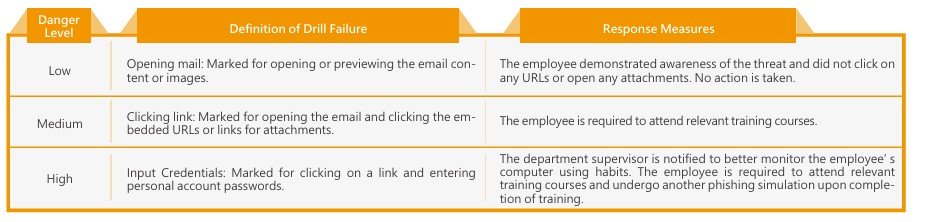
To enhance employees’ awareness of email-based social engineering, GIS began implementing regular simulations of hackers sending phishing emails in 2024. These simulated attacks are designed to test employees’ ability to recognize and respond to malicious emails. Employees who failed the simulation are provided with appropriate training based on the severity of the failure.
Customer Relations
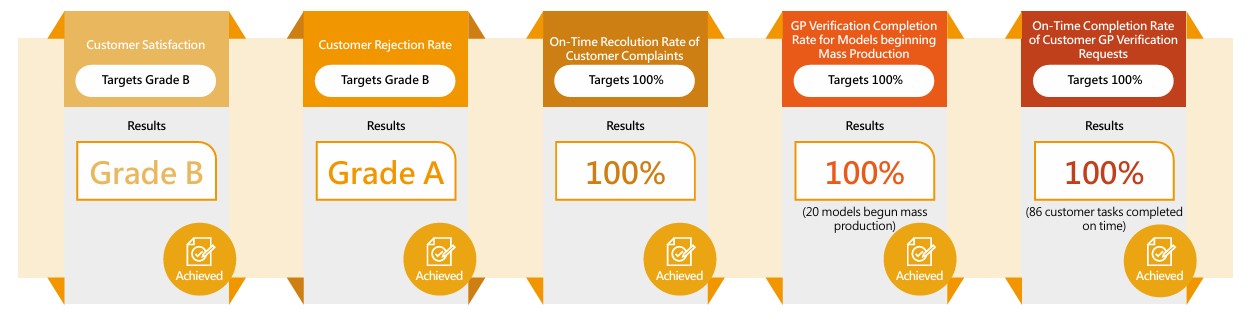
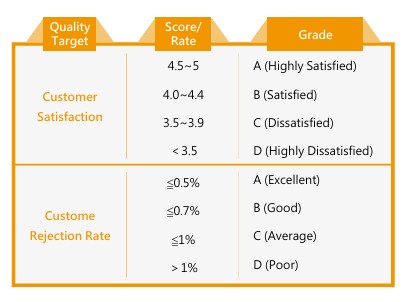
In 2024, in response to the Company’s transformation and increasing product diversification, GIS redefined the targets and presentation method of its customer satisfaction survey to further optimize product quality, strengthen internal quality control, and reduce customer complaints. Instead of using numerical scores and percentages, the survey results for customer satisfaction and customer rejection rates were presented using a grading system, enabling stakeholders to intuitively understand GIS’s product quality performance. The 2024 customer satisfaction survey results remained consistently high across all dimensions. Customers were especially satisfied with on-time delivery, prompt response to issues, rapid implementation of countermeasures, and early identification and resolution of potential risks. GIS is committed to maintaining this high level of customer service in the future.
Grading System for Customer Satisfaction and Customer Rejection Rate
2024 Customer Satisfaction Outcomes