GIS climate adaptation related actions
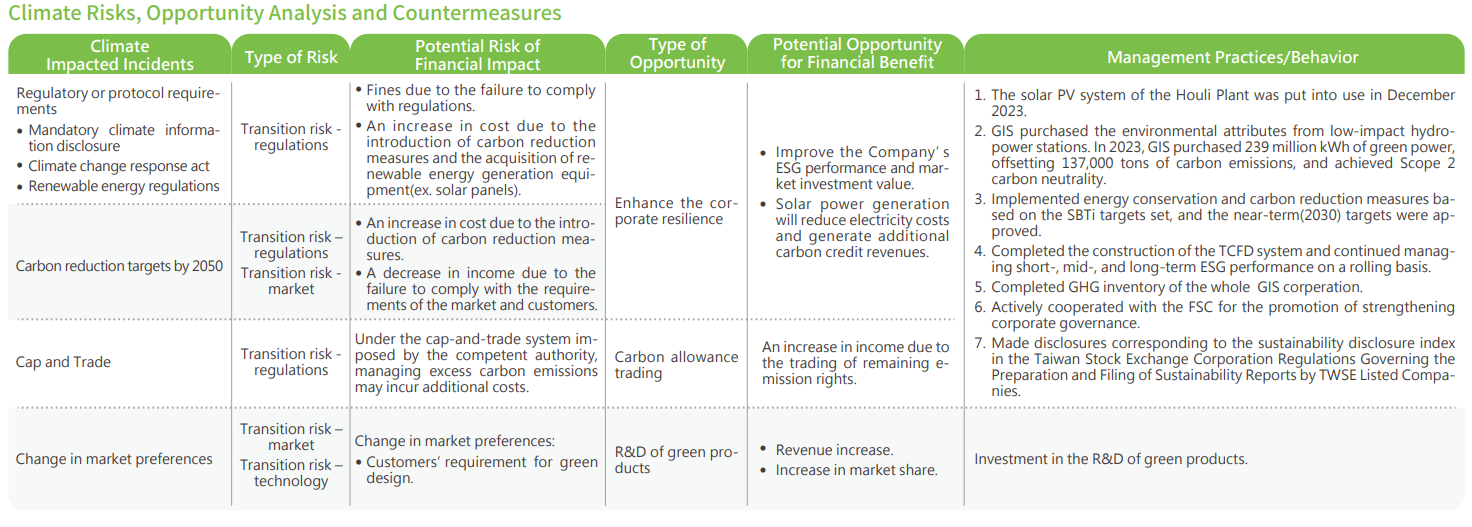
GIS categorizes climate risk assessments into short-term (2025), medium-term (2026-2027), and long-term (2028-2030) periods. By considering the implemented adaptation measures and assesses the impact severity and likelihood of operational impacts based on scenario simulations and issue relevance intensity. GIS also creates a risk and opportunity matrix to visualize these assessments.
Please refer to "GIS 2023 Climate-related Financial Disclosure (TCFD) Report" in our Download Section for more information.
Formulate supply chain management strategies to enhance supply chain resilience
1. Integrate internal group resources and obtain the most competitive supply chain partners through strategic cooperation to enhance the company's competitiveness.
2. Strengthen supply chain resilience:
(1) To avoid supply chain disruptions caused by climate risks, try to use local suppliers.
(2) Implement green procurement and circular economy, and use your own influence to drive the supply chain to improve economic, social and environmental performance.
3. Issue climate risk questionnaires: Pay attention to suppliers' energy resource use and water resource management to respond to the impact of extreme climate change on the supply chain.
4. No compromise on conflict minerals: Ensure that products and supply chain partners do not use conflict minerals, strictly abide by relevant international and industry regulations (such as EICC), and resolutely do not accept or use minerals (including gold, tantalum, tin, tungsten, and cobalt) from the Democratic Republic of the Congo (DRC) and its surrounding areas that are controlled by illegal armed forces or used to directly or indirectly fund the region; implement due diligence and information disclosure on the supply chain involved in accordance with regulations/industry/customers/other relevant parties, and actively promote supply chain improvements.
GIS Climate Mitigation Related Actions
Implementing internal carbon pricing
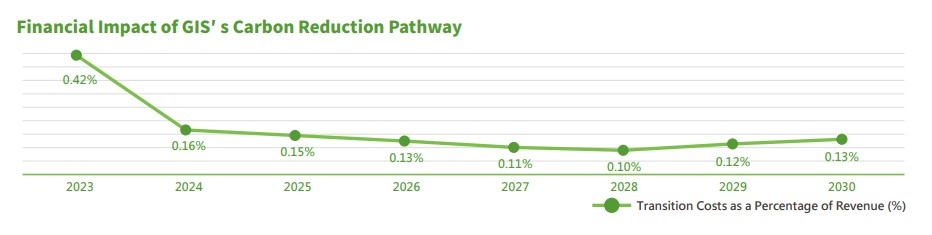
To further reduce overall carbon emissions, GIS carried out a pilot internal carbon pricing assessment in October 2024. After comprehensively referencing carbon market trading prices and internal carbon emission costs across various countries, the Company adopted Taiwan′s 2024 announced carbon fee rate of NT$300 per metric ton as the internal carbon pricing benchmark. GIS plans to first introduce a shadow pricing mechanism, which will not only raise departmental awareness of their respective carbon emissions but also help identify the Company′s carbon-intensive hotspots, thereby facilitating the development of effective carbon reduction strategies.
Implementing Energy-Saving and Carbon Reduction Projects
GIS will implement 40 energy-saving and emission-reduction projects by 2024 (such as cleanroom FFU replacement and air compressor waste heat recovery), saving 17.5GWh of electricity.
Installing a solar power system
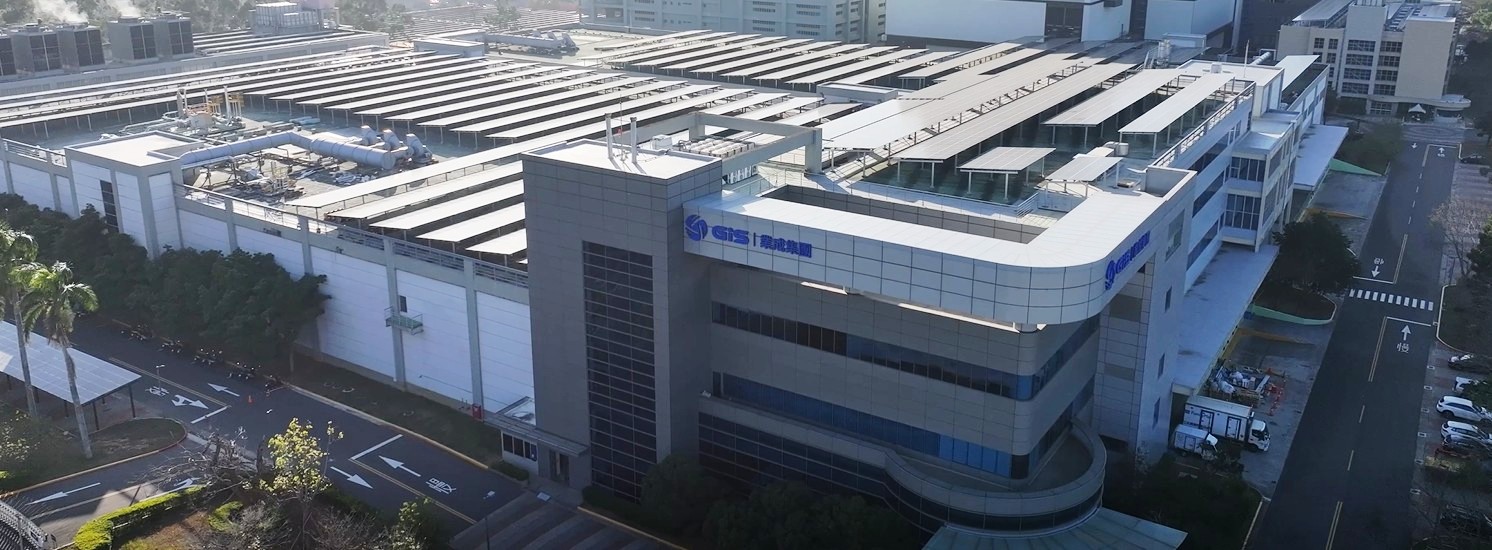
GIS invested a total of NT$159 million in its Houli plant in Taiwan. Construction began in June 2023, and operations began in December 2023. By 2024, the Houli plant's solar power generation system had generated 3.2 million kilowatt-hours of electricity (equivalent to reducing carbon emissions by approximately 1,527 tons annually). Future plans include installing a solar power generation system at the Chengdu plant.
Investing in the Green Energy Industry
GIS made a new investment in Kai-Hung Energy Co., Ltd. in Q2 2024. The company will primarily invest in renewable energy projects such as solar and wind power, as well as energy storage projects in Taiwan. The invested power plants are expected to be connected to the grid and generate electricity starting in 2026. As of the end of 2024, the company's accumulated external investments reached NT$35.94 million, and the company expects to increase investment annually.