Innovative Technology Breakthrough
The company is a leading manufacturer of touch and display module technology, providing a full range of touch display technology solutions. Its business model and product quality have been recognized by many world-class customers around the world. In recent years, with the development energy of existing optical, mechanical, and electronic integration technologies, it has actively invested in new-generation applications such as metaverse, biometrics, and smart cars, and developed optical waveguide near-eye display modules, fingerprint recognition, and a number of smart cockpit products, such as head-up displays, low-reflection glass coating technology, and Mini LED touch display modules. In the future, it will continue to strengthen its differentiated competitive advantages through diversified integration and high value-added differentiated business models.
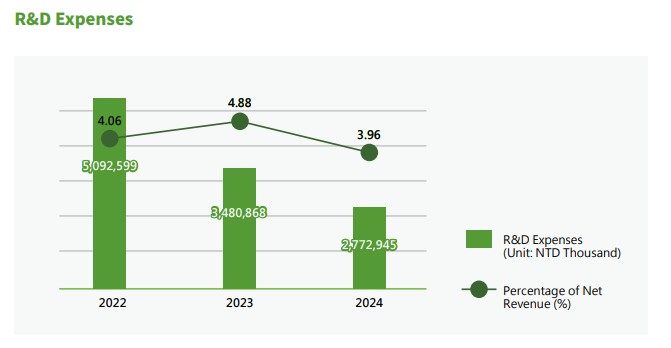
In order to strengthen technological research and development innovation, GIS continues to invest in equipment and recruit R&D personnel with relevant experience to study market patents and technology layouts, find breakthroughs, establish patent barriers, strengthen market research and analysis, and make correct market target selection and coverage strategies. GIS will invest a total of NT$2,772,945,000 in R&D funds in 2024 (accounting for 3.96% of total revenue), and a total of 527 R&D personnel (accounting for 5.7% of the total number of employees). As of the end of 2024, a total of 1,695 patents have been obtained. GIS will continue to increase the number of patents and set improving patent quality as a mid- to long-term goal.
GIS Green Product Design
GIS refers to the green product design and development guidelines issued by the Group and introduces the concept of product life cycle. It minimizes environmental damage from material selection, production, distribution and other GIS-related stages and uses various resources effectively. GIS is used as an example as follows:
1. Non-toxic material selection:
(1) Desulfurization risk monitoring has been introduced in October 2020 and is continuously monitored every year.
(2) It is expected that PFAS Free materials will be gradually introduced from 2025 to 2027.
2. Energy saving in production:
(1) The volume of HUD is effectively reduced to reduce material usage.
(2) Precision optical assembly technology is developed to reduce the optical efficiency loss caused by optical component assembly errors. In 2024, power consumption has been successfully reduced by 30%. In 2025, it is expected to improve the LED luminous efficiency for HUD and reduce energy consumption by another 20%.
3. Material reduction in distribution:
(1) The packaging material sharing plan (upstream and downstream shared tray) is implemented to avoid unnecessary waste.
(2) Through the packaging material recycling mechanism and the mixing of new materials for shipment, the use of packaging materials is reduced year by year.
(3) Supply chain tray reuse: A total of 213 tons will be recycled in 2024, with a recycling rate of up to 91%.
AI Trends and Responses
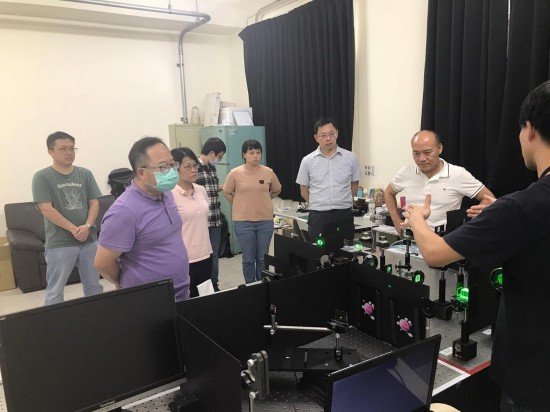
Looking at the current next-generation forward-looking technologies and artificial intelligence application fields, based on the display mode settings required for wearable devices, the terminal market demand tends to augmented reality glasses devices, and the application of real-time integration of virtual and real image information is a high-potential AI commercial product. GIS has been collaborating with National Central University since 2023. This project focuses on the development of VHOE display technology and is committed to cultivating global forward-looking display talents. It will continue in 2024. While GIS emphasizes sustainable development, it continues to develop innovative designs in order to seize the opportunity in the ever-evolving dynamic market and strengthen corporate resilience.