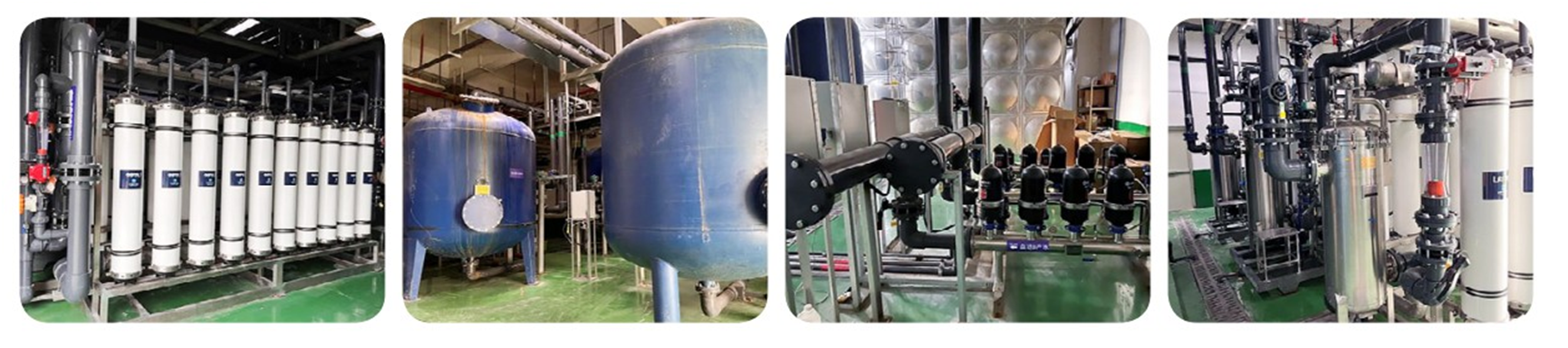
Water Resource Management
As climate change exacerbates the occurrence of extreme weather events, water-related issues such as droughts and floods are increasingly emerging across regions, indirectly impacting business operations. Consequently, water resource management has become a crucial sustainability issue for businesses in recent years. Our company also prioritizes water resource issues, establishing its first water conservation target in 2022, aiming to achieve an annual water conservation rate of 1.5% compared to the previous year. Annual water usage data compiled by our company and its subsidiaries must be verified by a third-party agency to ensure its reliability and validity. Data from 2022 to 2024 was audited in accordance with ISO14064-3 and certified by SGS.
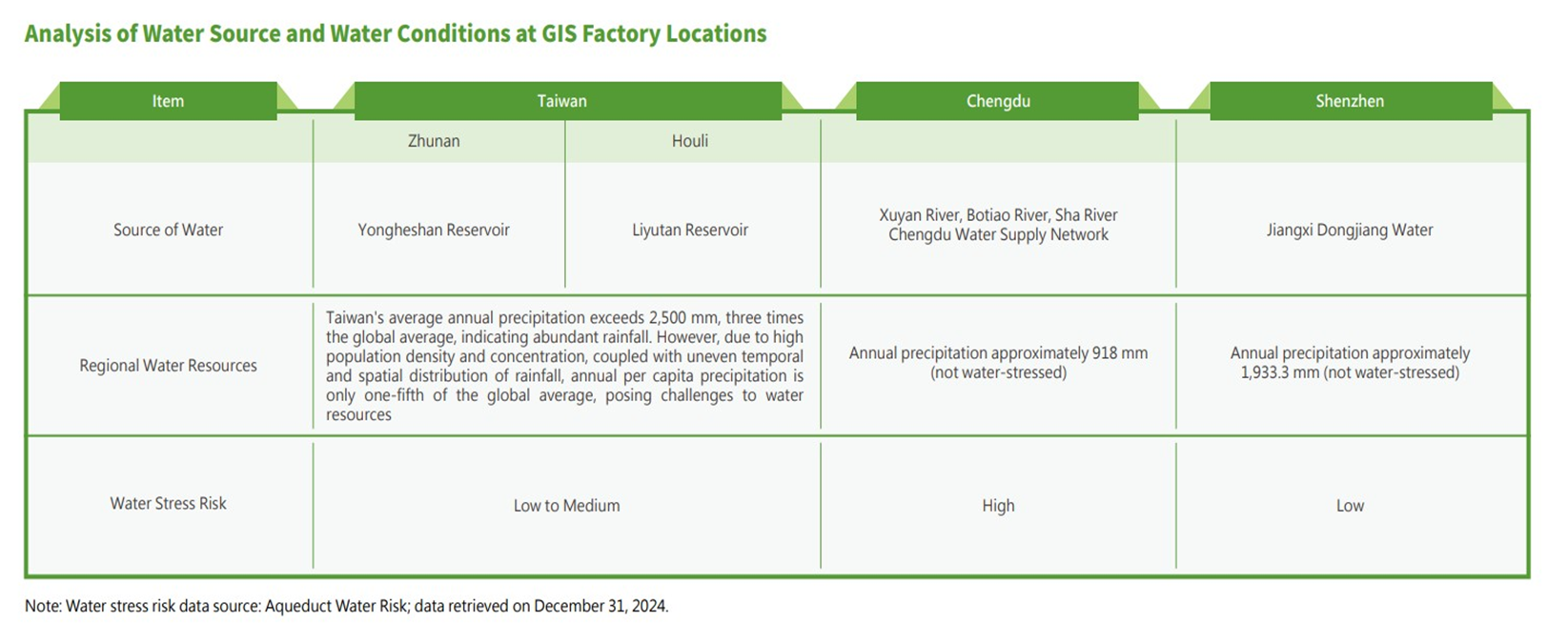
Water Source and Water Conditions Analysis
GIS uses the World Resources Institute (WRI)'s Aqueduct Water Risk Assessment Tool to identify the current water resource risks at each of its sites. Based on the level of risk, GIS further develops management strategies and contingency plans to mitigate the impact of water shortages on the company. The company's 2024 assessment results are as follows:
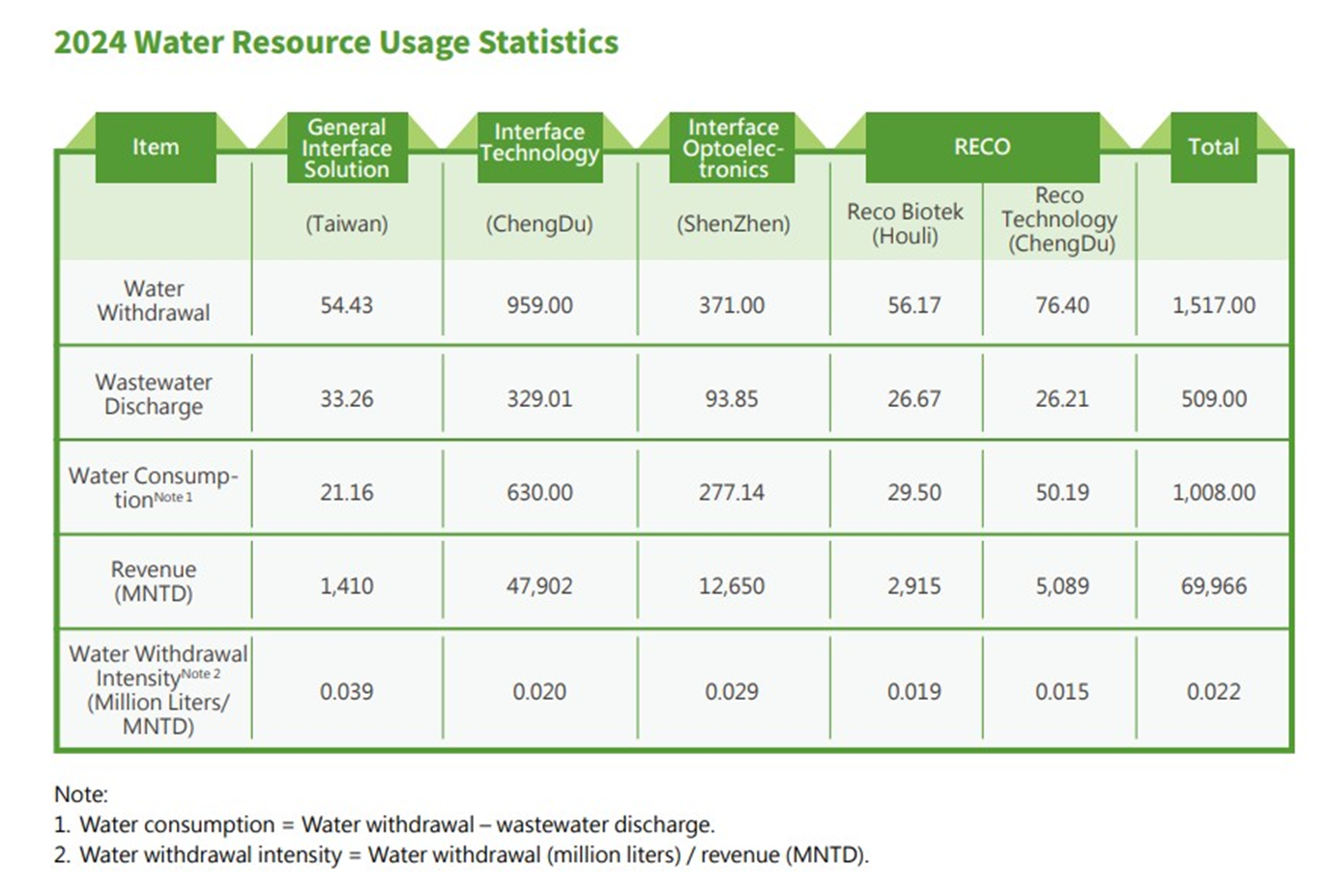
Water Resource Usage
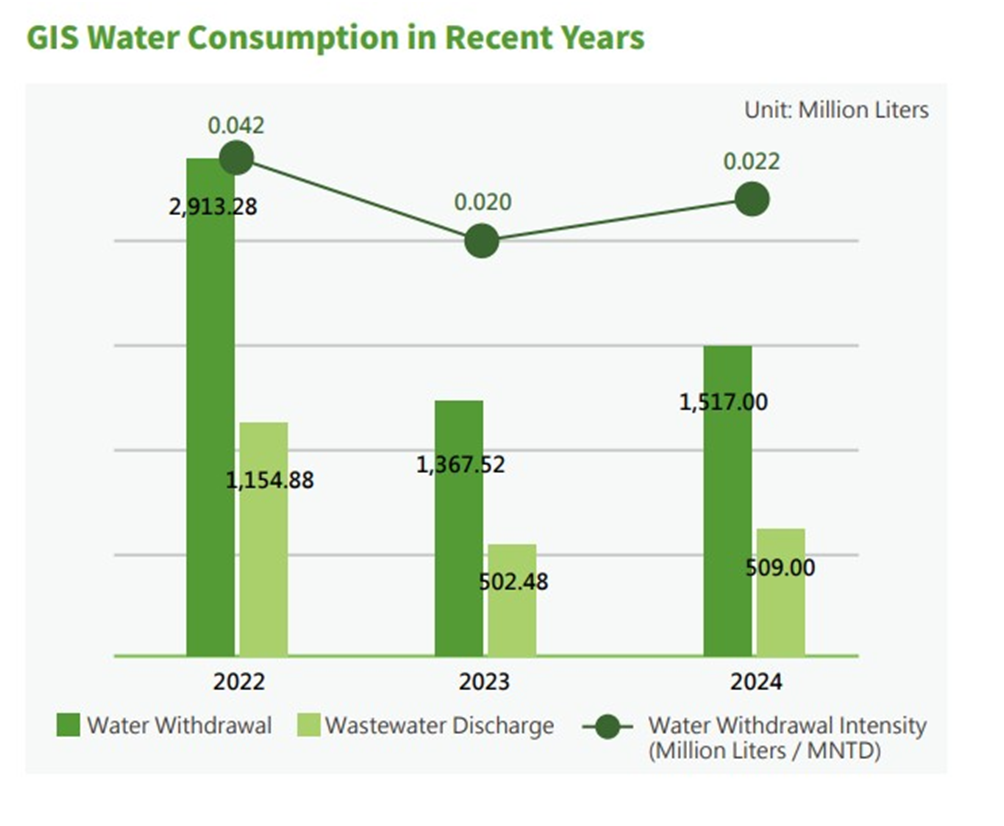
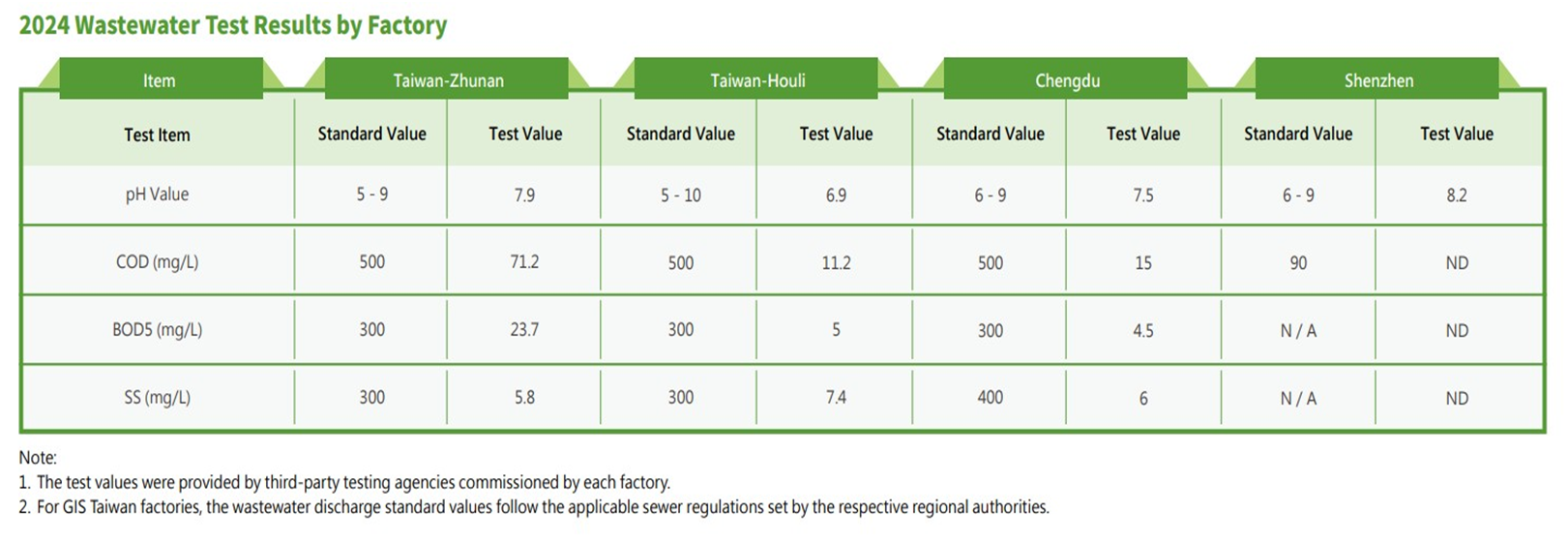
The primary water source used by GIS is municipal tap water, and all withdrawals comply with local regulations without causing significant environmental impact. Through enhanced water recycling and process optimization, GIS′ s water withdrawal in 2024 totaled approximately 1,517 million liters (primarily for process use), representing a reduction of 21 million liters compared with 2023 (1,496 million liters; seeNote). Wastewater discharges at all GIS facilities comply with local discharge standards and are regularly tested by third-party agencies. No significant negative environmental impact has been caused by wastewater discharge at any factory. Note: As this year′ s disclosure scope includes RECO, the 2023 water withdrawal figure has been updated from 1,368 million liters, as originally disclosed in the 2023 ESG Report, to 1,496 million liters.
Wastewater Management
The wastewater discharged from each plant area complies with local emission standards and is regularly tested by third-party organizations. The wastewater discharge from each plant area has not caused significant negative impacts on the environment.
Water Conservation Projects
GIS implements water conservation projects on an annual basis. In 2022, the Company established its first water-saving target, aiming to improve the water conservation rate by 1.5% each year compared with the previous year. Based on this target, a minimum rate of 40.4%Note should be achieved by 2024. In 2024, GIS launched 12 water-saving projects, which included wastewater and RO concentrate recovery and reuse, MAU condensate recovery, and adjustments to domestic water supply. These initiatives resulted in a total water savings of 618 million liters, achieving a watersaving rate of 40.73% thus meeting the set target. Note: Due to the inclusion of RECO in this year′ s disclosure scope, the 2023 water-saving rate was revised from 42.54%, as originally disclosed in the 2023 ESG Report, to 38.9%. Based on the revised 38.9%, the 2024 water-saving rate needed to reach at least 40.4% in order to meet the Company′ s target.
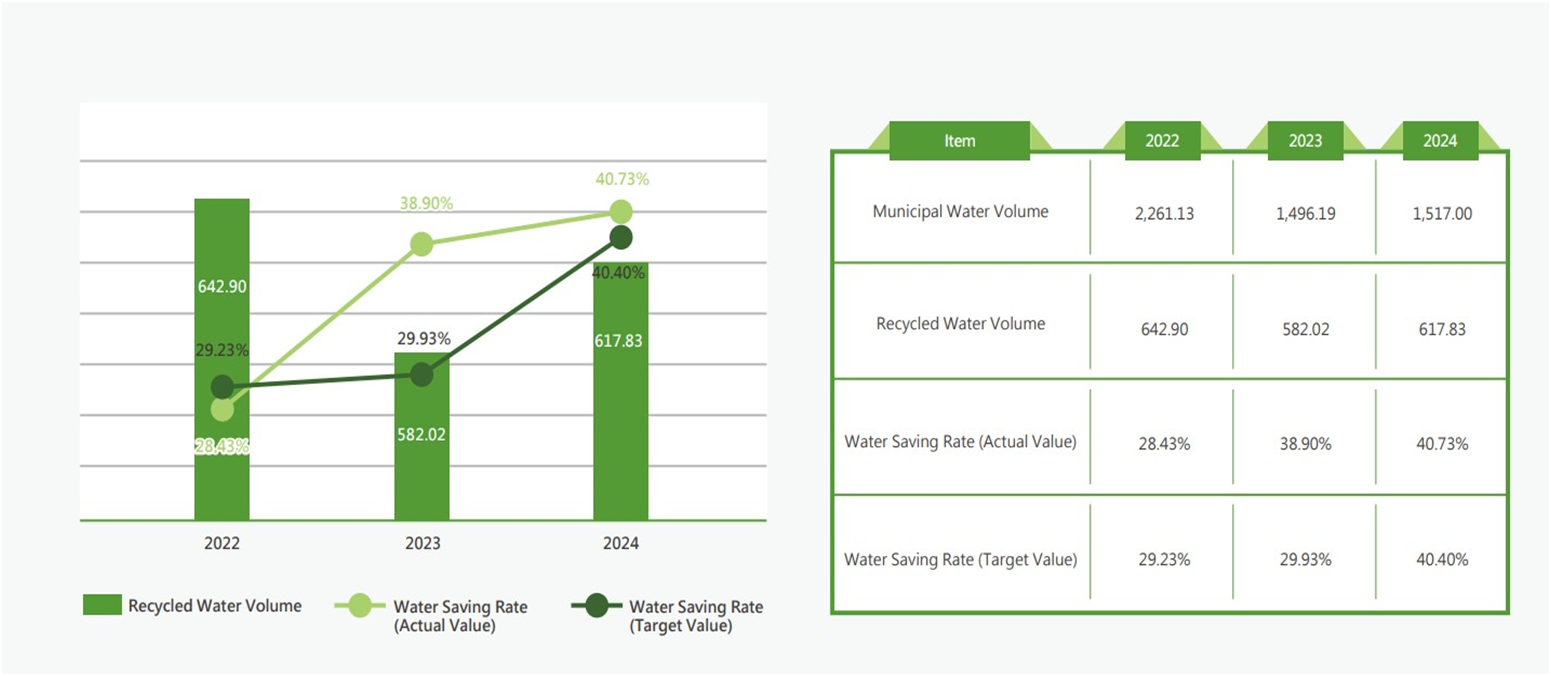
From 2022 to 2024, the company implemented 29 water conservation projects, saving a total of 2,381 million liters of water. GIS's water conservation projects over the years are as follows:
| water conservation projects | Total water saved (million liters) |
2022 | 7 | 642.90 |
2023 | 10 | 582.02 |
2024 | 12 | 617.83 |
Total | 29 | 1,842.75 |