Waste and Hazardous Substance Management
The Company is committed to environmental protection and has set a target to increase its waste diversion rate to over 99% by 2025. The Sustainable Development Committee conducts annual performance reviews and regularly carries out internal and external audits. All types of waste at GIS are legally sorted and placed in designated temporary storage areas, and licensed, professional waste disposal contractors are engaged to perform recycling, reuse, or appropriate clearance and disposal, in accordance with regulations from the national fire agency, central environmental protection authorities, and the Ministry of Environment. Final disposal of all waste is periodically tracked and audited by responsible departments to ensure legality and safety. In 2024, the GIS Shenzhen Factory was awarded the UL2799 Zero Waste to Landfill – Platinum Certification, the highest level of recognition.
Hazard Determination and Identification
In accordance with the Waste Management Operation Specifications of GIS, the Company conducts hazard determinations and classifications of waste during the environmental impact assessment stage based on factors such as waste name, composition, and annual generation volume. Identified hazardous waste must be stored in compliance with regulations. Waste classification is as follows:
Non-hazardous waste:Packaging materials from upstream transportation stages, waste glass scraps and miscellaneous items generated during production, as well as general household and kitchen waste.
Hazardous waste:Includes sludge, organic wipes/cotton swabs, cleaning agents, and organic solvents, etc.
Total Waste
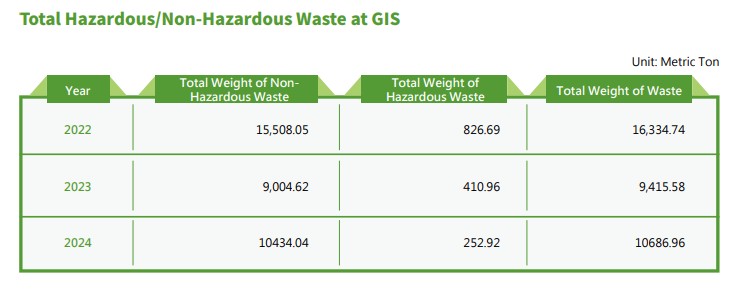
According to statistics, the total weight of waste generated by the Company in 2024 was 10,686.96 metric tons, an increase of 1,271.38 metric tons compared with 2023 (9,415.58 metric tons). All waste was disposed of offsite. As non-hazardous waste accounts for the majority of GIS′ s total waste, the Company is dedicated to reducing it by increasing the recycling rate and adjusting raw material packaging, such as reusing pallets, packaging bags, and trays. GIS also continues to perform internal and external audits and has adopted the ISO 14001:2015 Environmental Management System, with the latest certificate valid until November 13, 2025.
Improve waste diversion rates
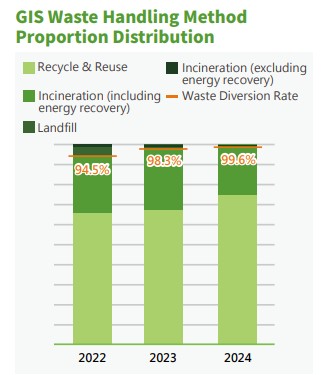
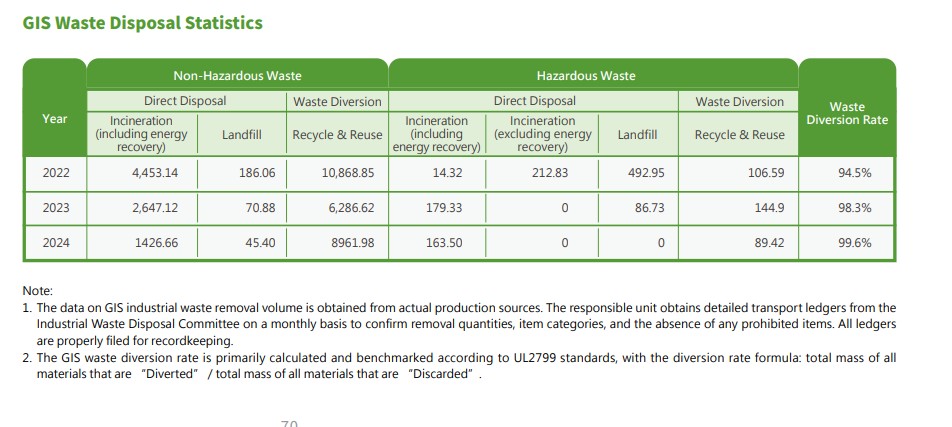
To achieve resource sustainability, our company prioritizes on-site reuse in waste management, reducing raw material use and minimizing the use of energy-saving incineration/landfilling methods. GIS has achieved its waste conversion rate targets for the past three years, with the annual reduction in hazardous waste decreasing from 50.28% (2023) to 38.45% (2024). To more effectively improve waste conversion rates, GIS is continuously optimizing waste classification management and exploring and implementing new resource recycling projects. The recycling projects implemented in 2024 are as follows:
Resource Recycling Project
• Waste Grease to Biodiesel: 5.92 tons of recycled material will be used in 2023, with 5.14 tons actually converted into biodiesel, for a recycling rate of 86%.
• Empty Acetone and Anhydrous Ethanol Drums: Recycled at the original manufacturer.
• Organic Wipes: Reused.
• Supply Chain Tray Reuse: 213 tons will be recycled in 2024, with a recycling rate of 91%.
• Waste Glass Scrap Disposal: Used in road asphalt, building materials, and building tiles, the conversion rate will increase from 0% to 100% in 2024.
The 2024 GIS waste treatment improvement data are as follows:
• Incineration (including energy recovery) accounted for 14.88%, a decrease of 15.14% from 30.02% in 2023.
• Landfill accounted for 0.42%, a decrease of 1.25% from 1.67% in 2023.
• Diversion and recycling accounted for 84.70%, an increase of 16.39% from 68.31% in 2023.
Hazardous Substance Control Policy
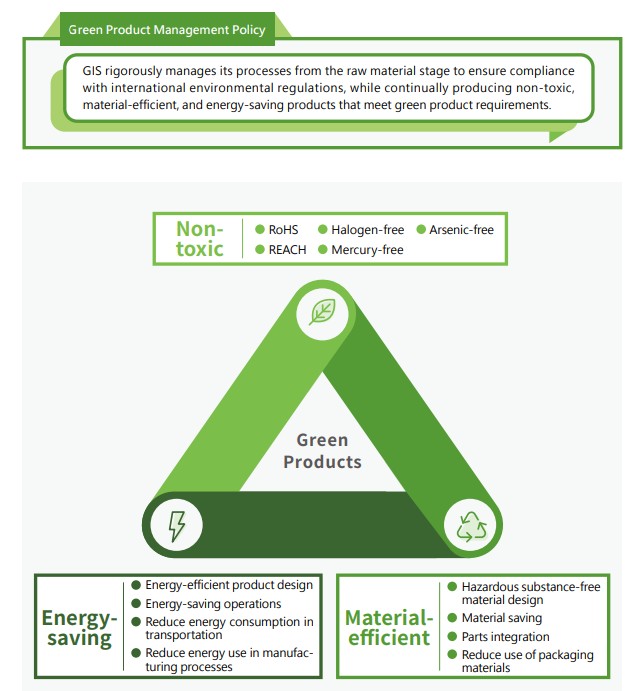
GIS ensures a sound hazardous substance management system by monitoring and improving it. Combining this with risk and opportunity management, GIS continues to provide non-toxic, green, and environmentally friendly products, creating competitiveness for GIS in green products while fulfilling its sustainable operations.
QC080000 Hazardous Substances Process Management System
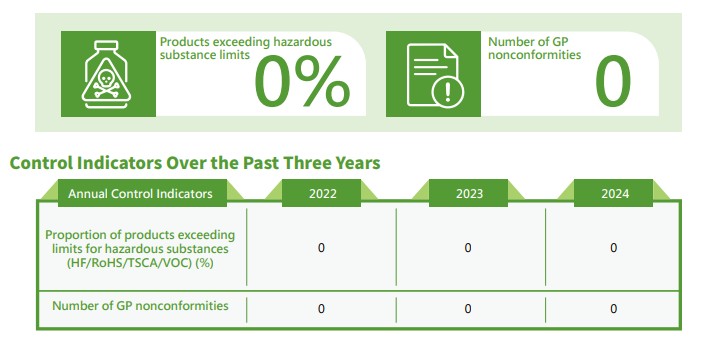
GIS implemented the QC080000 Hazardous Substances Process Management System in 2012 and obtained certification from a third-party notary public. The system transitioned to the new version and received certification in 2021. All products are 100% compliant with international safety and environmental regulations (including RoHS, WEEE, HF, REACH, etc.). GIS has also established a GP team responsible for managing its hazardous substances system.
GIS Controlled Substances Handling Specifications
Since 2011, GIS has revised its Controlled Substances Handling Specifications 15 times (as of the end of 2024) to ensure that all products and materials comply with the latest regulatory requirements. In 2024, the company, in accordance with internal regulations, identified hazardous substances and implemented a tiered management system (Level 1, Level 2, and Level 3). There are 58 major categories of controlled substances, with stakeholders requesting additional control for 242 items, resulting in over 900 substances actually being controlled. To address changes in legal requirements, such as the EU REACH Regulation, the company promptly updates its Controlled Substances Handling Specifications and meticulously manages each update.
Supplier Traceability System
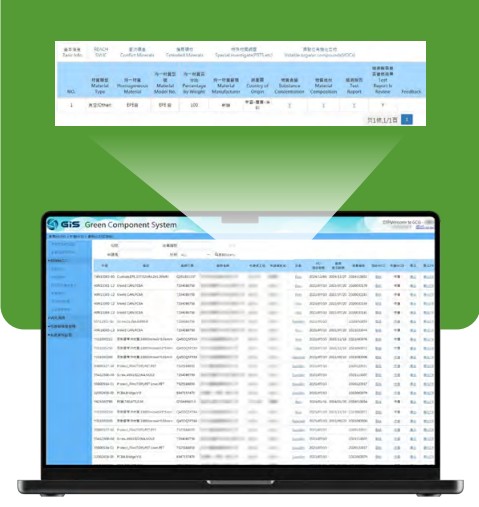
The GIS Supplier Traceability System clearly records all material information provided by each supplier, including batchspecific data such as material type, homogeneous material supplier, country of origin, and whether testing reports are available. This system ensures full traceability of materials used in production and supports GIS′s raw material traceability management practices.