Energy Management
Environmental and Energy Management System
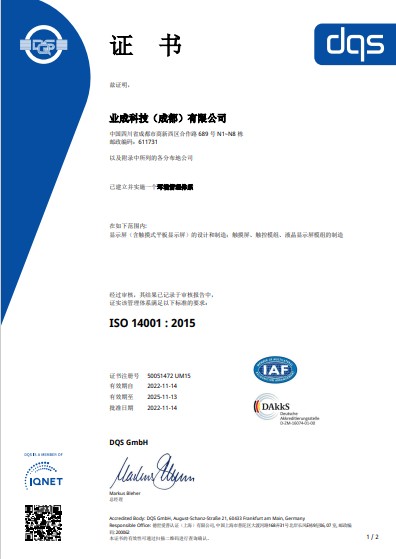
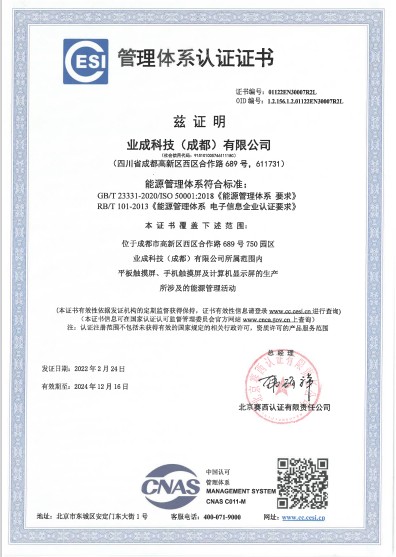
GIS implemented the ISO 50001 Energy Management System in 2015 and passed certification in December of the same year. The Energy Management Team regularly conducts effective reviews of energy utilization across all energy-consuming units and systems, proposes improvement recommendations based on GIS's actual operating environment, and develops annual energy management goals and performance parameter monitoring plans. GIS plans to conduct annual audits by a third-party certification agency to ensure the continued validity of its certification. The latest certificate is valid until December 29, 2026. GIS has also implemented the ISO 14001:2015 Environmental Management System, with the latest certificate valid until November 13, 2025.
Clean Electricity
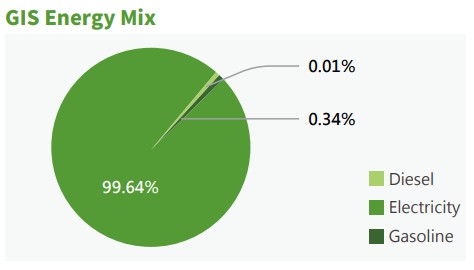
GIS primarily consumes electricity, gasoline, and diesel, with electricity accounting for 99.64% of total energy consumption. In response to stakeholder expectations, the Company actively promotes the use of clean energy. As early as 2020, GIS signed a green power usage agreement with stakeholders, committing to 100% green power use for product manufacturing and related activities within the group. In 2024, GIS further pledged to achieve 100% green power usage across the entire group by 2030 – a target that has been approved by the SBTi.
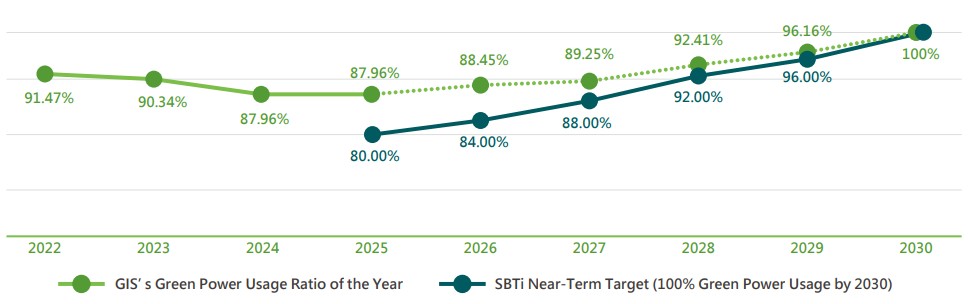
From 2022 to 2024, GIS′s factories in Mainland China achieved 100% green power usage for three consecutive years. In 2024, the overall green power usage rate across all factories reached 87.96%, aligning with the Company's short-term target set in the roadmap.
GIS Mainland China Plant: In 2024, a total of 228 million kWh of green electricity was purchased in Mainland China (including 58 million kWh of hydropower environmental rights surplus in 2023, 105 million kWh of hydropower environmental rights, 38 million kWh of green certificates from Mainland China, and 27 million kWh of green electricity direct purchases in 2024). A total of 210 million kWh of green electricity was actually used, with 18 million kWh of hydropower environmental rights surplus allocated for contract fulfillment in 2025.
GIS Taiwan Plant: In 2023, NT$159 million was invested in the construction of a solar power generation system at the Houli Plant. As of 2024, 3.2 million kWh of electricity had been generated. Further plans are in place to install a solar power generation system at the Chengdu Plant in Mainland China.
Energy-Saving Projects
In 2022, a total of 80 energy-saving projects were implemented, saving 19.6 GWh of electricity.
In 2023, a total of 44 energy-saving projects were implemented, saving 12.9 GWh of electricity.
In 2024, a total of 40 energy-saving projects were implemented, saving 17.5 GWh of electricity.
Greenhouse Gas Management
GIS conducted its first carbon inventory in 2019 and expanded and refined its inventory scope in 2022, referencing ISO 14064 and the GHG Protocol, with 2022 serving as the base year. GIS plans to conduct regular annual greenhouse gas inventories covering the company and its subsidiaries, with all relevant data verified by a third party.
GIS passed the SBTi audit in March 2023. By 2030, with 2022 as the base year, GIS aims to achieve an absolute 42% reduction in both Scope 1 (direct emissions) and Scope 3 (upstream and downstream emissions along the value chain). This will result in a 5.25% annual reduction in total Scope 1 and Scope 3 carbon emissions compared to the previous year. Green electricity consumption is also targeted to reach 100% by 2030.
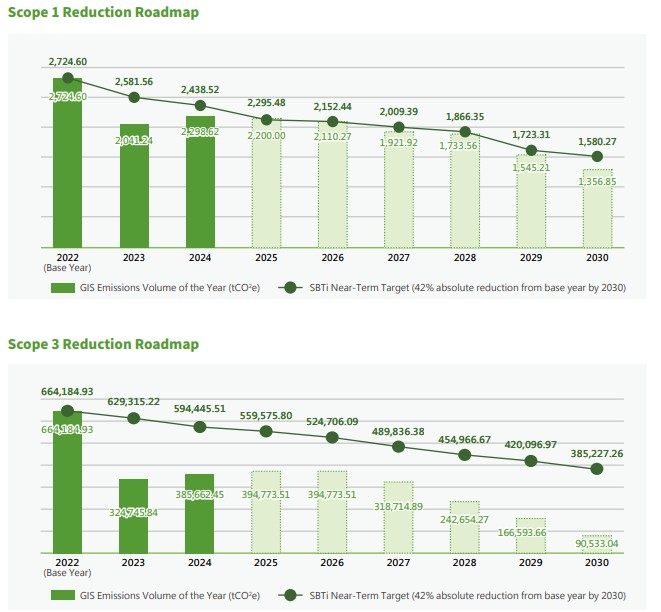
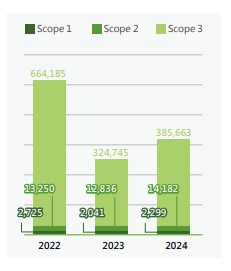
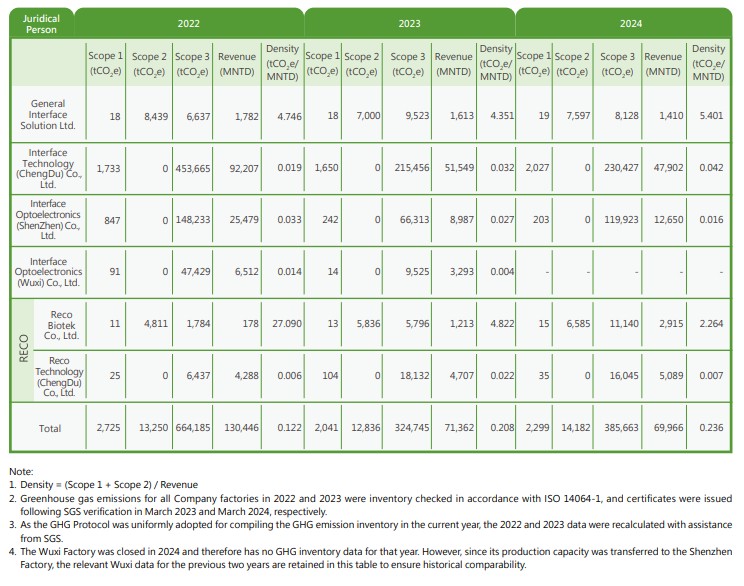
In 2024, GIS will inventory seven major greenhouse gases: carbon dioxide (CO2), methane (CH4), nitrous oxide (N2O), hydrofluorocarbons (HFCs), perfluorocarbons (PFCs), sulfur hexafluoride (SF6), and nitrogen trifluoride (NF3). GIS will use this inventory to compile a greenhouse gas emissions inventory. The GIS carbon emission data is as follows: