Biodiversity
Biodiversity Commitments and Policies
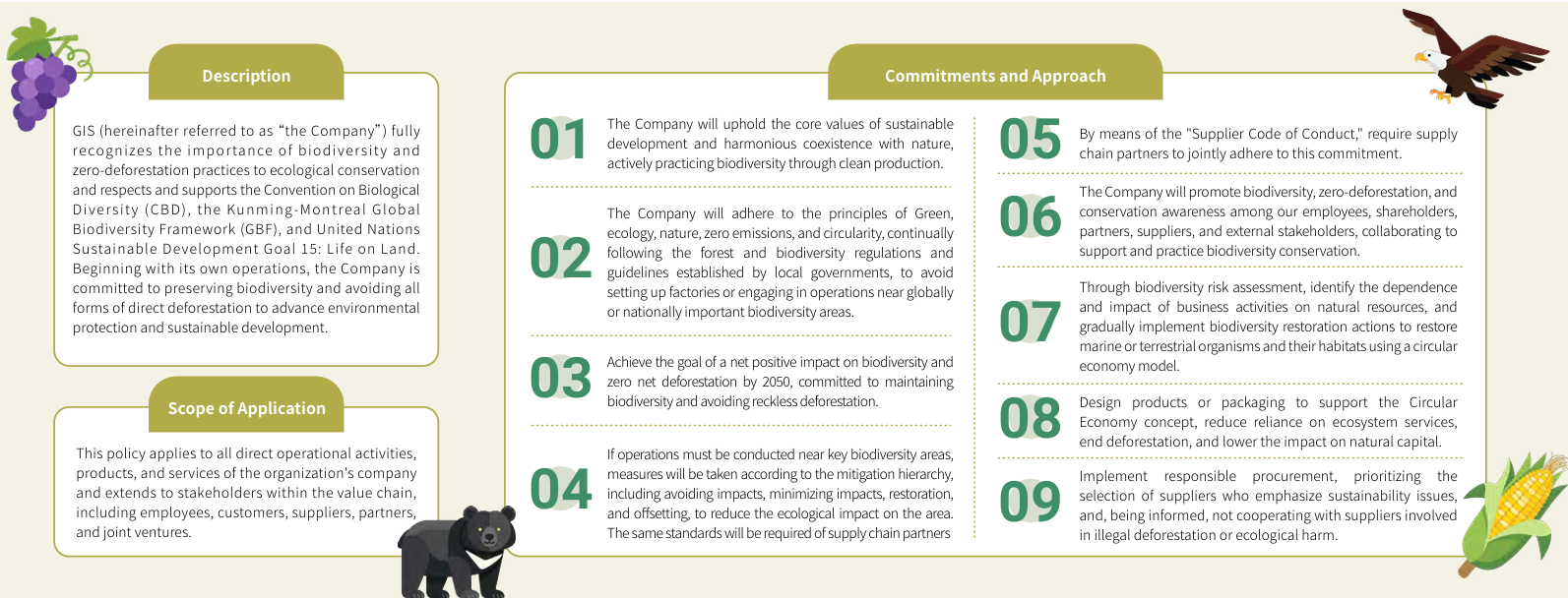
GIS fully recognizes the importance of biodiversity and zero-deforestation practices to ecological conservation and respects and supports the Convention on Biological Diversity (CBD), the Kunming-Montreal Global Biodiversity Framework (GBF), and United Nations Sustainable Development Goal 15: Life on Land. Beginning with its own operations, GIS is committed to preserving biodiversity and avoiding all forms of direct deforestation to advance environmental protection and sustainable development. The GIS "Biodiversity and Zero-Deforestation Policy" has been signed by the Chairman. For details, please refer to the official website.
Description
GIS (hereinafter referred to as “the Company”) fully recognizes the importance of biodiversity and zero-deforestation practices to ecological conservation and respects and supports the Convention on Biological Diversity (CBD), the Kunming-Montreal Global Biodiversity Framework (GBF), and United Nations Sustainable Development Goal 15: Life on Land. Beginning with its own operations, the Company is committed to preserving biodiversity and avoiding all forms of direct deforestation to advance environmental protection and sustainable development.
Scope of Application
This policy applies to all direct operational activities, products, and services of the organization's company and extends to stakeholders within the value chain, including employees, customers, suppliers, partners, and joint ventures.
Assessing the Interactions Between the Company and Nature in Alignment with the TNFD Framework
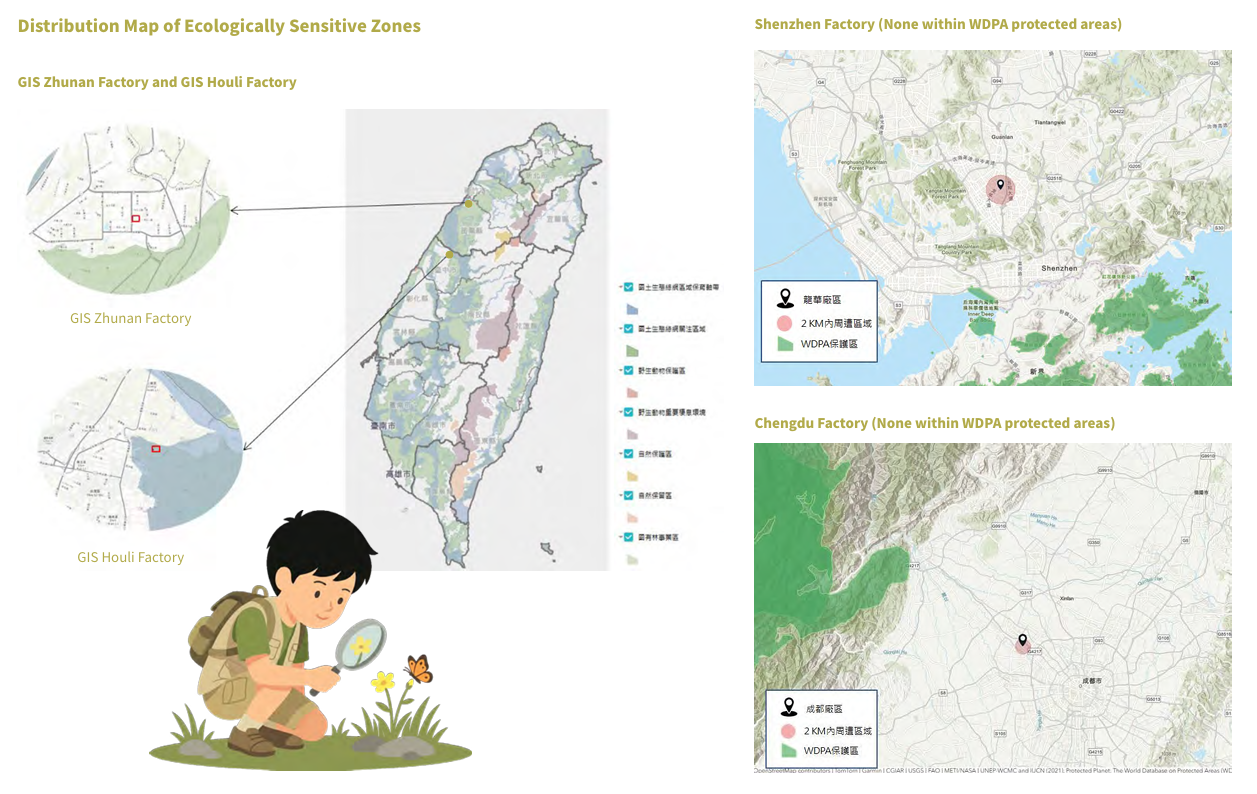
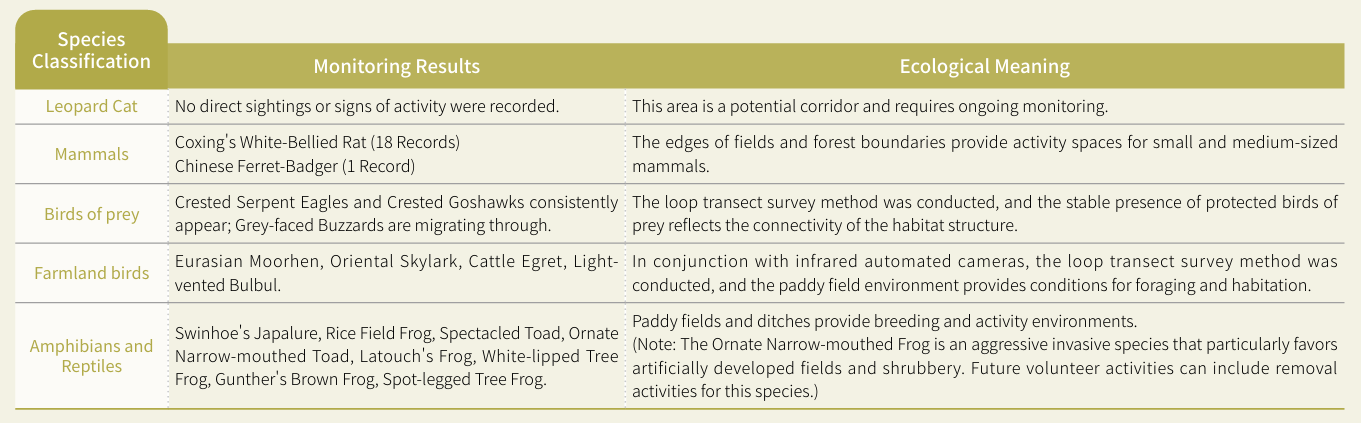
In 2024, through TNFD assessments, GIS determined that it does not directly or significantly impact ecosystems or the habitat utilization of species of concern. However, it remains proactively attentive to threatened species, focusing on Taiwan's endemic species around its operational sites. GIS has initiated efforts to protect the "Leopard Cat" and its habitat. In 2025, we adopted an ecological monitoring approach, focusing on contract rice paddies and extending outward to surrounding farmland, forest edges, and river environments (approximately 0.19 hectares, including a 20-meter buffer zone). This approach aims to capture the interactions between paddy management behaviors and surface vegetation, hydrological conditions, and biological activities, achieving a harmonious connection between the environment and people.For further details, please visit the Download and refer to the latest Sustainability Report.
Distribution Map of Ecologically Sensitive Zones
Conserving the leopard cat is not just about protecting a single species, but is also key to maintaining the symbiosis between humans and nature! As a higher-trophic-level predator, the Leopard Cat regulates ecological balance by preying on rodents and hares. The survival status of the Leopard Cat reflects the health of the low mountain ecosystem and serves as a key indicator of biodiversity in Taiwan.
Data monitoring
GIS climate adaptation related actions
The Company also continues to strengthen its climate adaptation capacity to reduce the potential impacts of extreme weather events and other physical climate risks on its operations, supply chain, and employees.
Climate Risk and Opportunity Assessment Based on the Task Force on Climate-related Financial Disclosures (TCFD) Framework
To adapt to extreme weather events, mitigate the impacts of climate change, and identify development opportunities that may benefit the Company, GIS conducts an annual assessment of climate-related risks and opportunities in accordance with the TCFD framework.
GIS defines the short term as 2026, the medium term as 2027–2030, and the long term as 2030–2050. For potential climate-related risks and opportunities, the Company evaluates the degree of impact on business operations and the likelihood of occurrence by considering existing management measures, scenario analysis, and the relevance of each issue. Based on the assessment results, GIS develops climate risk and opportunity matrices to identify and prioritize material climate-related issues.
Climate-Related Risk and Opportunity Assessment Process
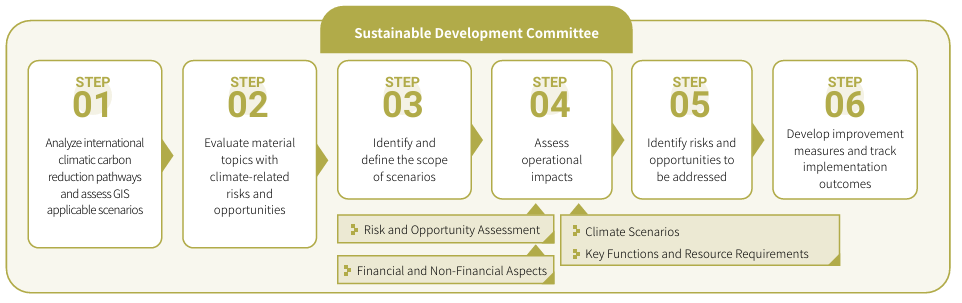
Climate-related Scenario Simulation
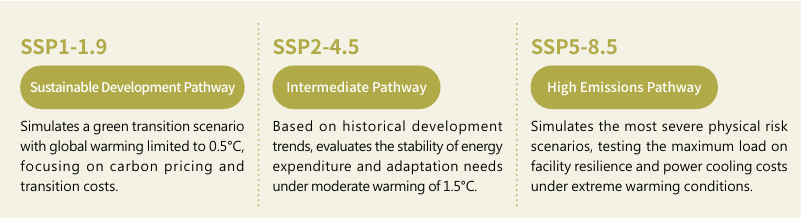
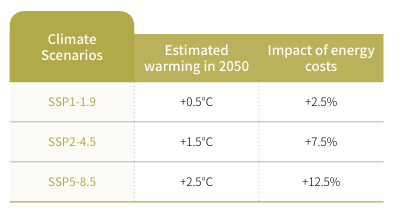
Climate Impact Assessment
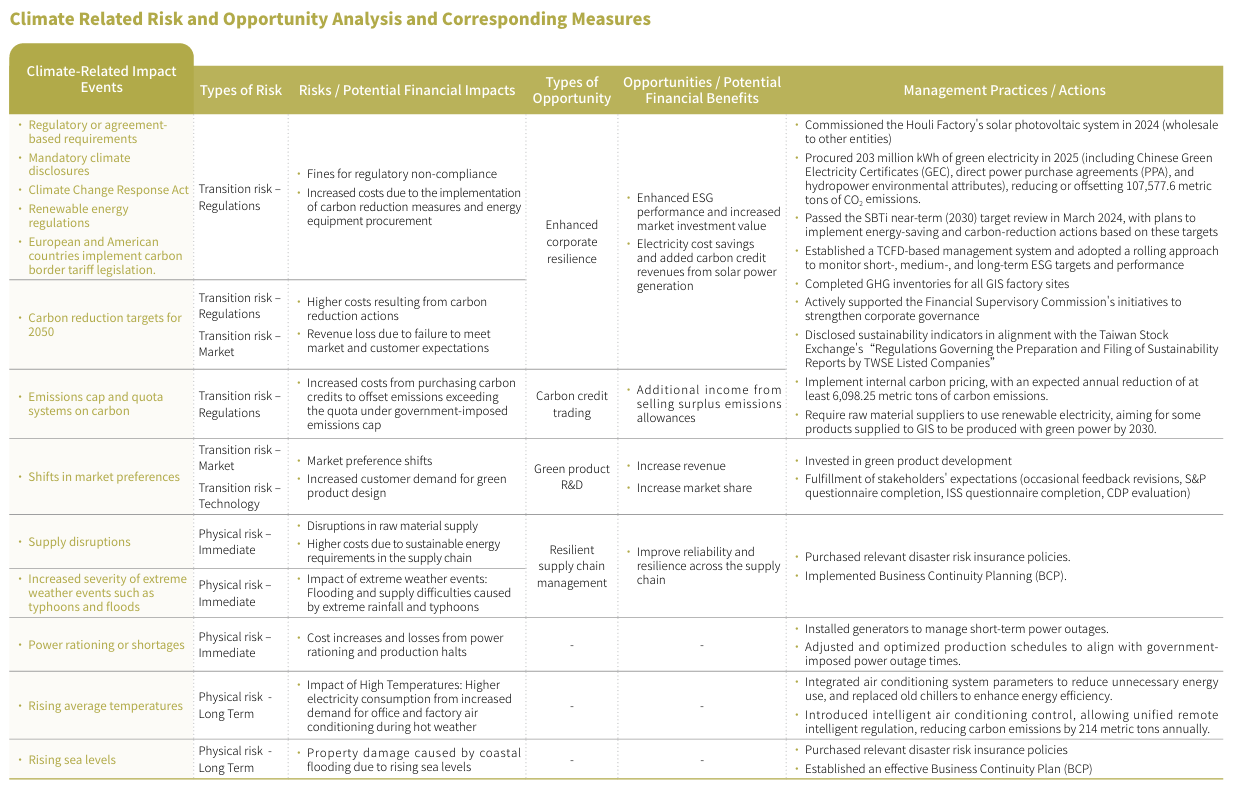
Climate Related Risk and Opportunity Analysis and Corresponding Measures
Climate-Related Metrics and Targets
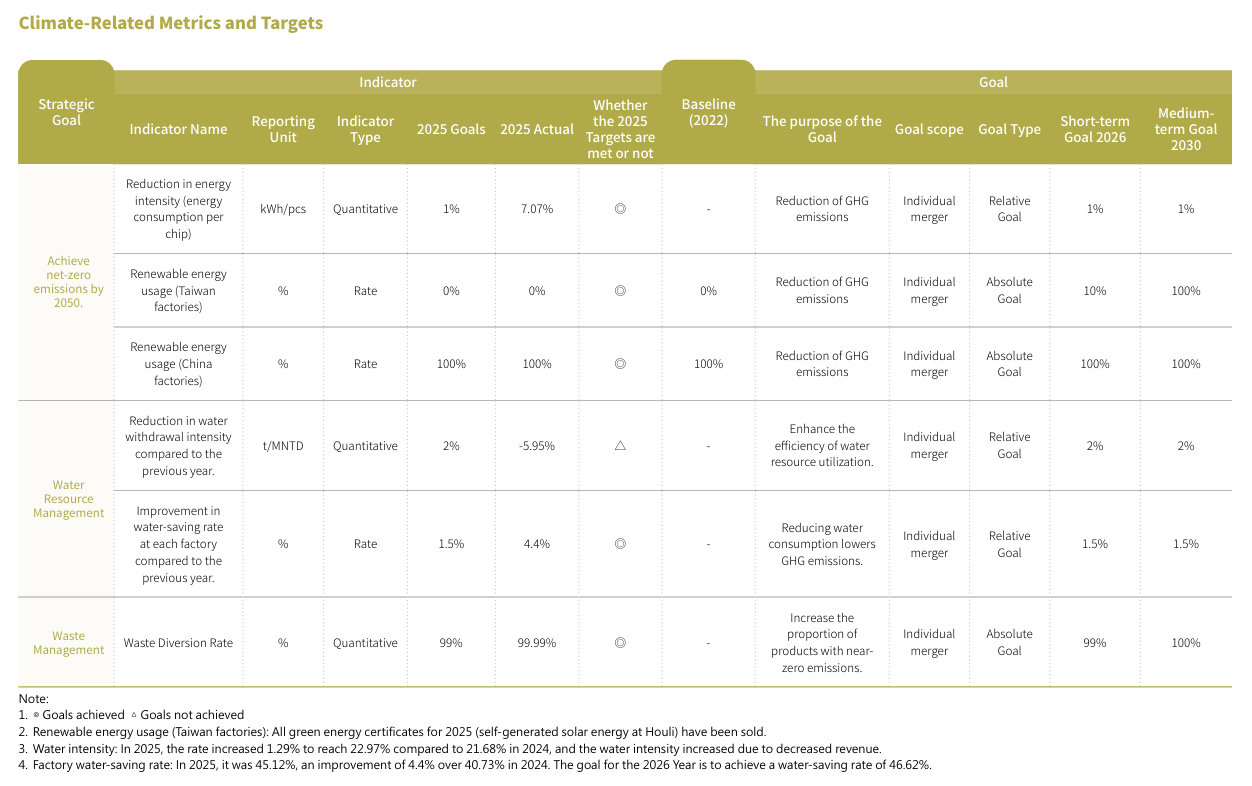
Formulate supply chain management strategies to enhance supply chain resilience
1.Integrate internal group resources and establish strategic partnerships with the most competitive supply chain partners to strengthen the Company’s overall competitiveness.
2.Enhance supply chain resilience:
To reduce the risk of supply chain disruptions caused by climate-related events, GIS gives preference, where feasible, to local suppliers.
Promote green procurement and circular economy practices, leveraging the Company’s influence to improve the economic, social, and environmental performance of supply chain partners.
3.Conduct ESG supplier surveys:
GIS monitors suppliers’ energy and resource use, as well as water resource management, to assess and address the potential impacts of extreme climate events on the supply chain.
4.Zero tolerance for conflict minerals:
GIS is committed to ensuring that its products and supply chain partners do not use conflict minerals and strictly complies with applicable international and industry standards, including relevant requirements of the EICC/RBA. The Company does not accept or use minerals, including gold, tantalum, tin, tungsten, and cobalt, originating from areas in the Democratic Republic of the Congo (DRC) and neighboring regions that are controlled by illegal armed groups or that directly or indirectly finance such groups. In accordance with regulatory, industry, customer, and other relevant stakeholder requirements, GIS conducts due diligence and information disclosure across applicable supply chains and actively promotes continuous improvement among supply chain partners.
GIS Climate Mitigation Related Actions
The Company continues to implement climate mitigation measures to reduce greenhouse gas emissions from its operations and value chain and accelerate the transition toward a low-carbon.
Financial Impact of GIS's Carbon Reduction Pathway
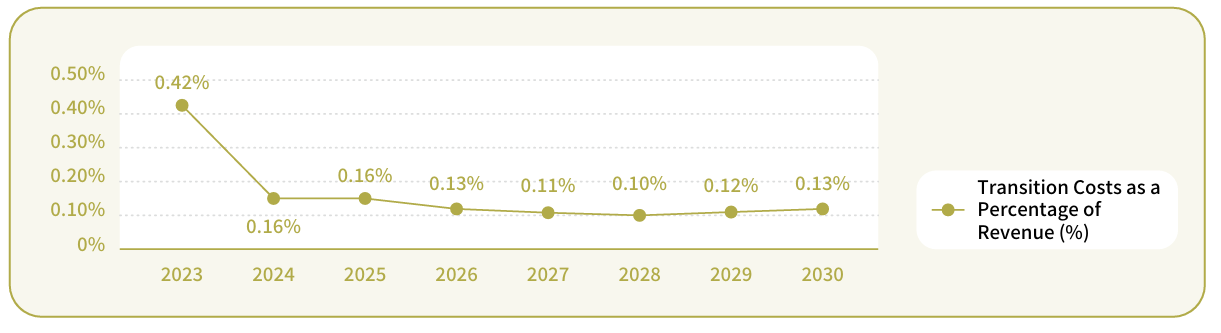
Implementing internal carbon pricing
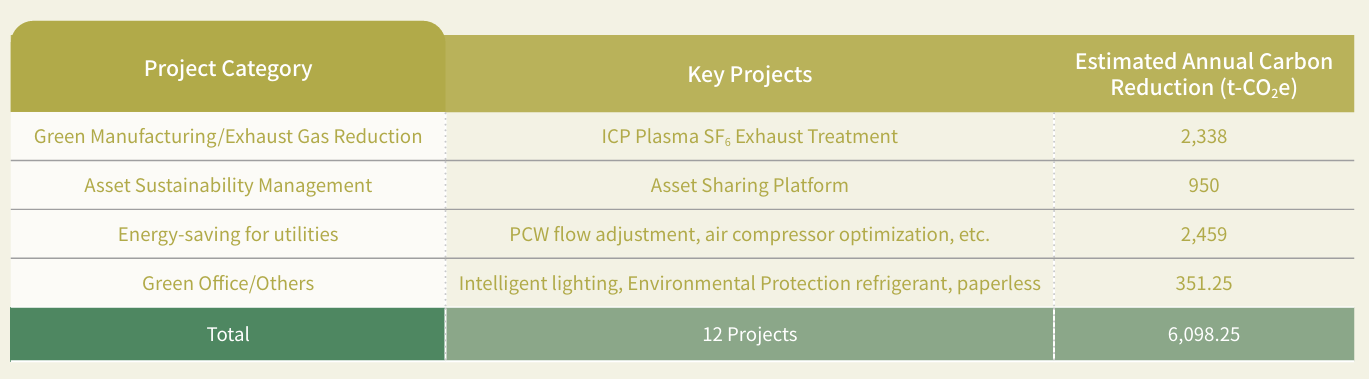
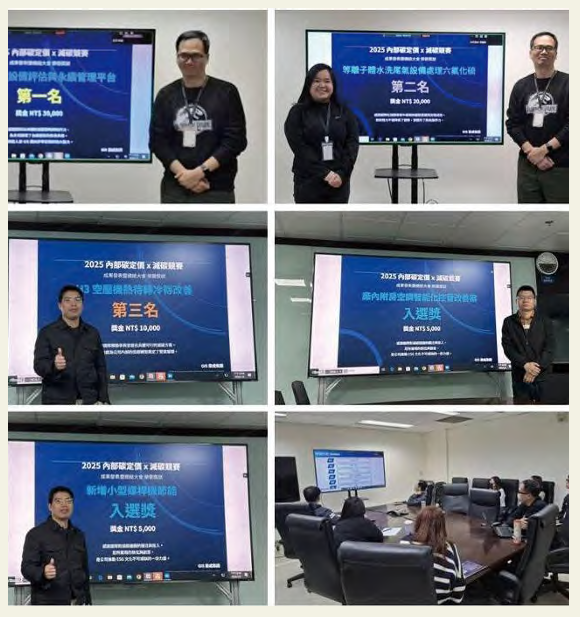
To further reduce overall carbon emissions, GIS carried out a pilot internal carbon pricing assessment in October 2024. After comprehensively referencing carbon market trading prices and internal carbon emission costs across various countries, the Company adopted Taiwan's 2024 announced carbon fee rate of NT$300 per metric ton as the internal carbon pricing benchmark. The Company has implemented the shadow pricing mechanism in 2025, which not only enhances departmental awareness of their carbon emissions but also facilitates the identification of the Company's carbon-intensive hotspots, thus aiding in the formulation of subsequent carbon reduction strategies. Additionally, an internal carbon reduction competition session was held, with an estimated reduction of 6,098.25 metric tons, equivalent to creating approximately NT$1,829,000 in "carbon cost offset benefits" for the Company. For further details, please visit the Download and refer to the latest Sustainability Report.
Performance Overview: Environmental Benefits and Financial Estimation
GIS Carbon Reduction Competition Awards Ceremony
Implementing Energy-Saving and Carbon Reduction Projects
The Company implemented a total of 34 energy-saving projects in 2025, achieving electricity savings of 13.4 GWh.
Installing a solar power system
In 2023, the Company invested NT$159 million in the construction of a solar power generation system at its Houli site. In 2025, the system generated approximately 3.76 GWh of electricity, which was sold to other entities under a feed-in arrangement.
The Company also plans to implement a rooftop solar power generation project at its Chengdu site. Construction is scheduled to begin in June 2026, with grid connection and power generation expected in October 2026. The project is estimated to generate approximately 5.7 GWh of electricity annually.
Investing in the Green Energy Industry
In response to the Company's goal of achieving 100% renewable electricity usage by 2030, GIS is obtaining the necessary green power for the Taiwan Factories by investing in Kai-Hong Energy Co., Ltd. (referred to as Kai-Hong Energy). This company will invest in several solar and wind power plants in the Taiwan region. Once the invested green power plants begin official operations, Kai Hong Energy shareholders may gain priority purchase rights for electricity based on their investment proportion. As of the end of 2025, GIS has accumulated an investment of NT$35.94 million in Kaihong Energy and plans to gradually increase the investment. Starting from 2026, as each power plant connects to the grid and begins operations, GIS will utilize the priority purchase rights to acquire solar and wind-generated renewable energy electricity to provide for the factory's use. In addition to the aforementioned investment projects, GIS has also invested in ESG-related industries such as electric vehicles, electric two-wheelers, lithium battery recycling, solar photovoltaic development, and energy storage through external investment platforms like CDIB-Innolux Limited Partnership, CDIB-Innolux II Limited Partnership, and HH-CTBC Partnership, L.P. As of the end of 2025, GIS's accumulated investment in these platforms has reached NT$210 million. The proportion of external investments in cleantech-related industries accounted for 53% of the total external investments for the year 2025. In the future, the Company will continue to invest in sustainability, promoting green transition.