Occupational Safety and Health Management
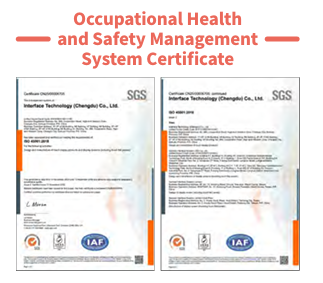
ISO 45001 Occupational Safety and Health Management System
GIS implemented the ISO 45001 Occupational Safety and Health Management System in 2013. Based on ISO requirements, we established ISO documentation and target controls, and conducted hazard analysis and risk assessments. We not only compiled key risk and environmental factors across all sites, but also developed corresponding control measures based on these factors. We also maintain and maintain external audit verification.In 2025, six operating sites, including Taiwan and China Factories, completed ISO 45001 certification. The company also completed triennial certification renewal audits, with the verification covering 100% of employees and workers.
Occupational Safety and Health Committee and Occupational Safety Officer Meetings
Each GIS plant has established an Occupational Safety and Health Management Committee/Safety Production Committee, with a chairperson as the highest-ranking person in charge of the plant, and committee members, executive officers, and employee representatives.In 2025, a total of 12 committee meetings and 60 officer meetings were held. At the General Interface Solution Ltd. Zhunan Factory, there were 5 employee representatives, 5 representatives from the Environmental Safety and Health Department, and 5 employer representatives. At the General Interface Solution Ltd. Houli Factory, there were 5 employee representatives, 5 ESH representatives, and 5 employer representatives. At the RECO Houli Factory, there were 5 employee representatives, 5 employer representatives, and 5 ESH representatives. These figures all comply with Paragraph 4, Article 11 of the Occupational Safety and Health Management Regulations, which requires that employee representatives comprise at least one-third of the committee, achieving a 100% implementation rate.

Occupational Safety and Health Education and Training
To ensure workers understand the plant's safety and health policies and establish a related safety and health culture, all new employees are required to receive environmental and safety education and training. In addition, external and on-the-job training is arranged according to work-related content to meet regulatory requirements. In 2025, GIS organized a total of 41 education and training courses, including in-house training and participation in external training. The courses were divided into four categories: Occupational Health and Safety (such as special operations and chemical management), Health (such as first aid personnel training), Fire Safety (such as ERT line leader firefighting practical training and floor fire emergency response), with a total of 93,776 training hours. The total training expenditure amounted to approximately NT$583,159.74.
Campaigns for Prevention of Workplace Misconduct
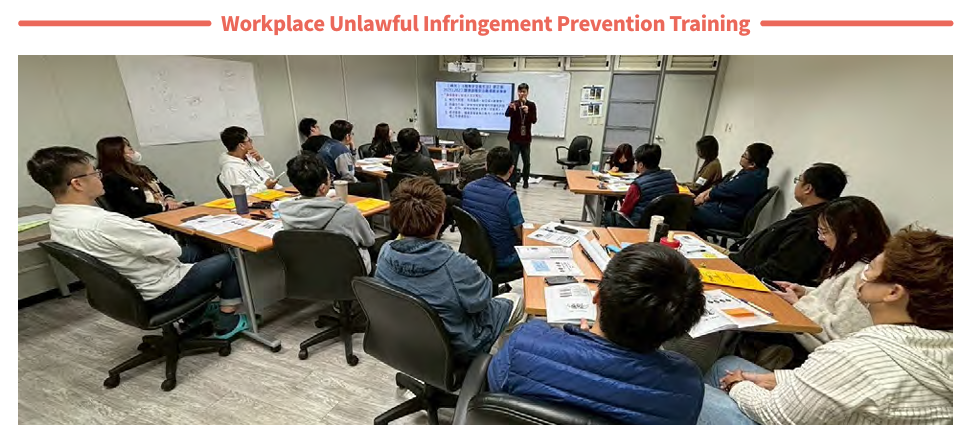
To protect employees from physical, verbal, and psychological abuse from supervisors, colleagues, and clients while performing their duties, a non-compliant infringement statement signed by the factory's top supervisor is publicly announced every six months. Annual risk assessments are conducted for the workplace and supervisors. Regular training sessions are held for new and current employees to educate them on relevant laws and establish correct behavioral norms. Complaint channels are also established, including telephone, written, and email. In 2025, GIS issued two public statements on unlawful infringement and conducted 68 training sessions for new hires, one on-the-job training session for all employees, and one training session for supervisors, totaling 70 sessions with 1,038 participants.
Control of Contractor Entry into the Worksite
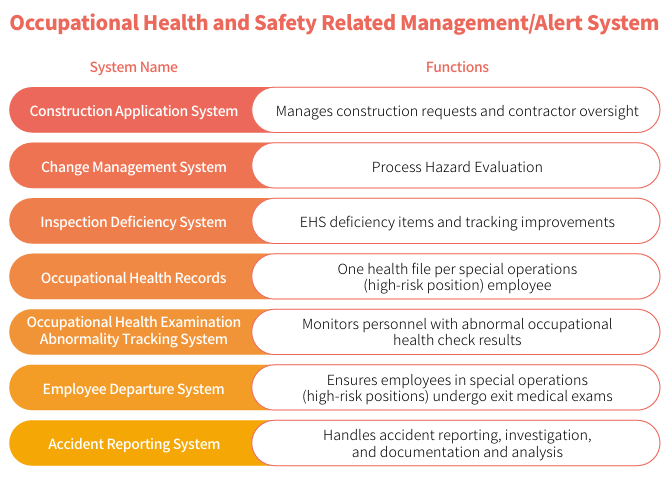
For contractors entering the plant for construction, GIS requires them to sign a Safety, Health, and Environmental Commitment Letter before commencing work. They must commit to complying with the Occupational Health and Safety Act and internal regulations during the construction period, which includes participating in consultative organization meetings, pre-construction safety meetings, and assigning appropriately configured labor for on-site operations. For construction personnel entering the plant, they are required to provide relevant safety and health information, including legally mandated insurance coverage, completion of an external six-hour "General Safety and Health Education and Training" Note, and participation in GIS's internal hazard communication education, ethics education, and anti-corruption awareness courses. This not only protects the rights of construction personnel but also ensures they possess adequate safety and health knowledge and skills. In addition, a construction risk assessment must be conducted before each project begins, requiring the availability of safety protection facilities and valid training certificates before work can start. During construction, the responsible and EHS departments provide supervision. Violations of safety, health, and environmental protection regulations incur corresponding penalties. Documentation such as the "Contractor Management and Construction Permit Application Guidelines" and "External Supplier Safety Management Standards" has been established for contractor management. In 2025, there were 16,284 construction applications and 1,314 construction inspection deficiencies handled by GIS, with a 100% improvement rate.
Disaster Drills
To ensure employee workplace safety, ensure timely and effective assistance in the event of an incident, minimize losses, and effectively prevent recurrence, GIS has established "Accident Reporting and Investigation Standards" to streamline the accident reporting, investigation, analysis, and handling processes.
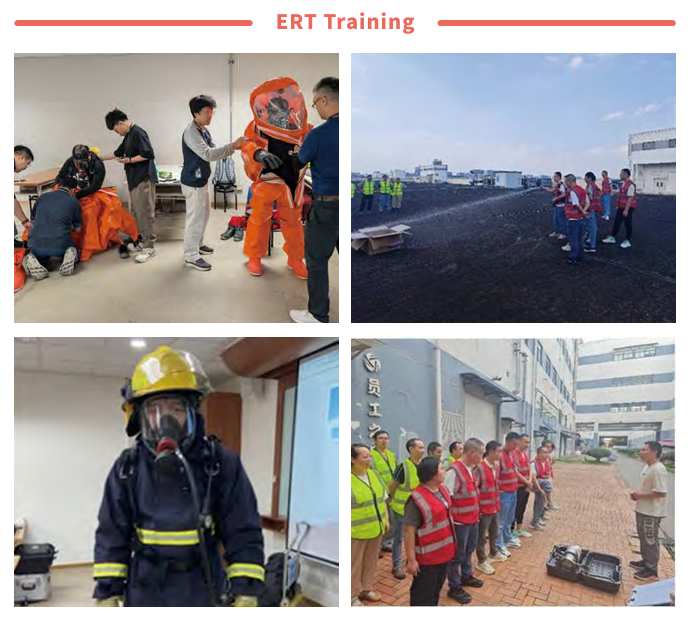
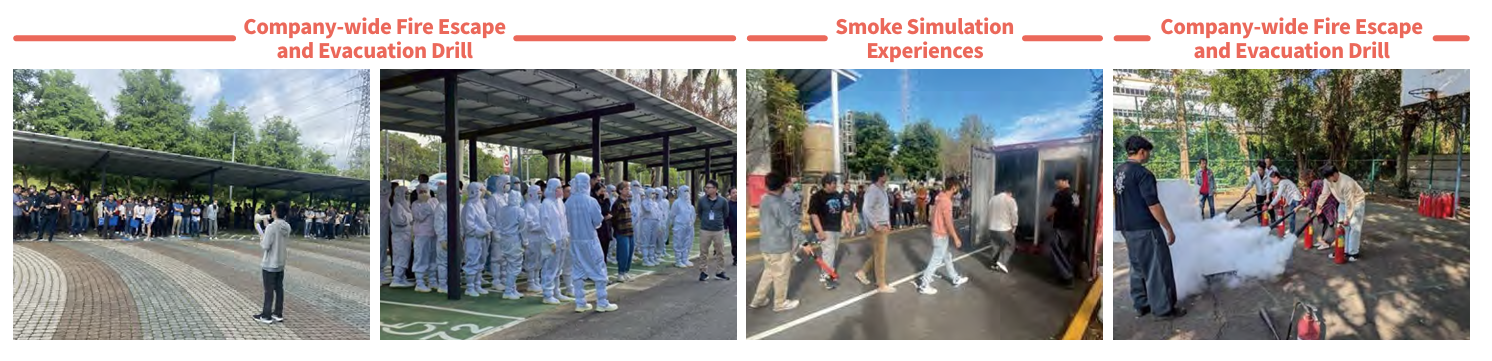
In 2025, GIS achieved a 100% compliance rate for drills. A total of 11 annual escape and evacuation drills were conducted with 22,729 participants, and 104 ERT/on-site response drills were held with 1,367 participants.
Statistics on Occupational Accidents
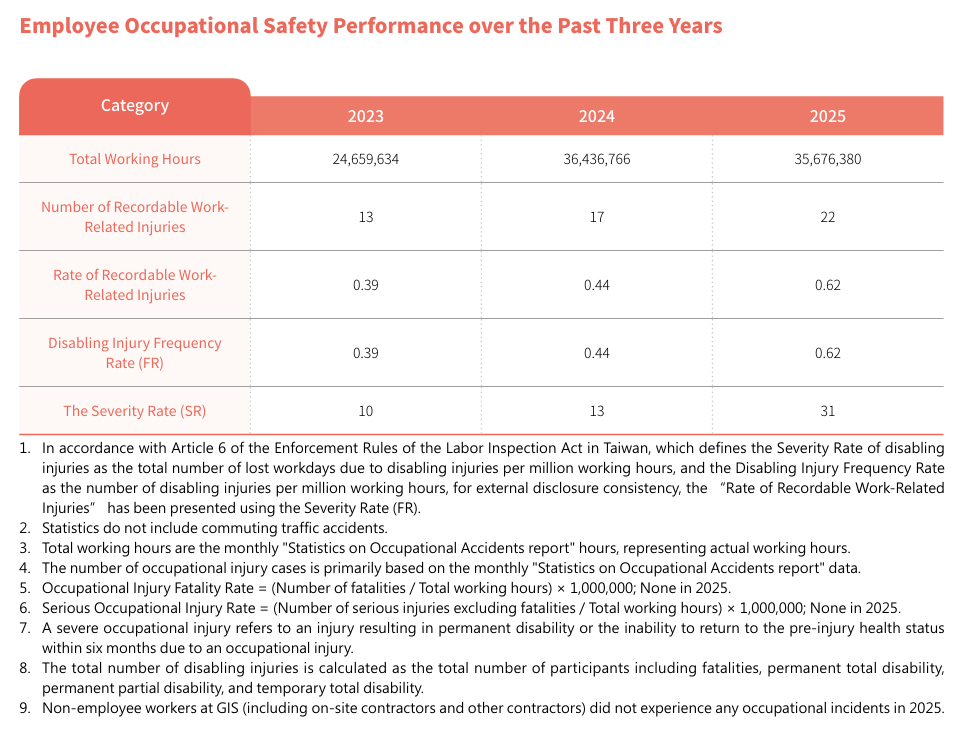
GIS strictly complies with occupational health and safety regulations, striving for zero major safety incidents and zero occupational diseases to ensure a healthy and safe working environment. In 2025, GIS reported a total of 22 recordable occupational injury cases, including cuts to 2 people, ergonomic injuries to 3 people, mechanical injuries to 1 person, collision injuries to 3 people, and falls or sprains to 12 people. The Disabling Injury Severity Rate (SR) of disabling injuries in the 2025 year was higher than the previous year, primarily due to frequent fall and ergonomic-related occupational injury incidents. The Environmental Safety and Health Department issued relevant announcements and conducted advocacy in hopes of effectively reducing these incidents.
GIS provides equal training and awareness programs on occupational health and safety to both employees and non employees. Although the Company does not include non employees in its official occupational injury statistics, injury cases involving non-employees are handled according to the same procedures as those for employees, and their respective contractors are notified for proper follow-up and resolution. According to Article 37, 2 items of the Occupational Health and Safety Act, GIS did not experience any major occupational accidents in 2025.
Employee Health Promotion
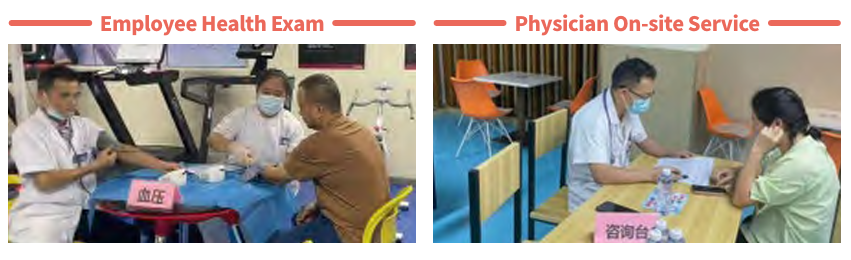
Our company has developed a health check program that surpasses current regulations. In 2025, a total of 24 site visits by occupational physicians were arranged, during which 21 tasks were conducted, including ergonomic hazard assessments, maternity protection programs, job suitability arrangements, and health report reviews. Additionally, three labor health service nurses were employed to be stationed at the factory to carry out labor health protection-related tasks.. In 2025, a total of 12,237 employees underwent health examinations, with 783 abnormal cases identified, at a total cost of NT$26,704,204. Employees with abnormal examination results were referred for hospital reexamination, and all results were confirmed as normal. The number of recordable occupational disease cases was 0, and the number of fatalities caused by occupational disease was also 0.
Health Promotion Activities
To build a positive work environment, enhance employees′ identification with the Company, and promote corporate sustainability, GIS organizes a variety of health promotion programs based on the health status of employees at each site, including disease prevention, wellness activities, and health lectures aimed at improving work efficiency and enhancing corporate competitiveness. The 2025 Health Awareness initiatives included 13 items such as heatstroke prevention, epidemic diseases, and awareness on the three highs. Health promotion activities comprise 74 items, including blood donation, Family Day, and team building activities. Health lectures cover 4 items, including topics like diabetes and obesity, immune diseases, and emotional aromatherapy. A total of 91 health promotion activities were held in 2025.
